Fixes might be blogged to help others — your data stays safe.
Leaky Sink P Trap
Published: 5/30/2026
Leaky Sink P Trap
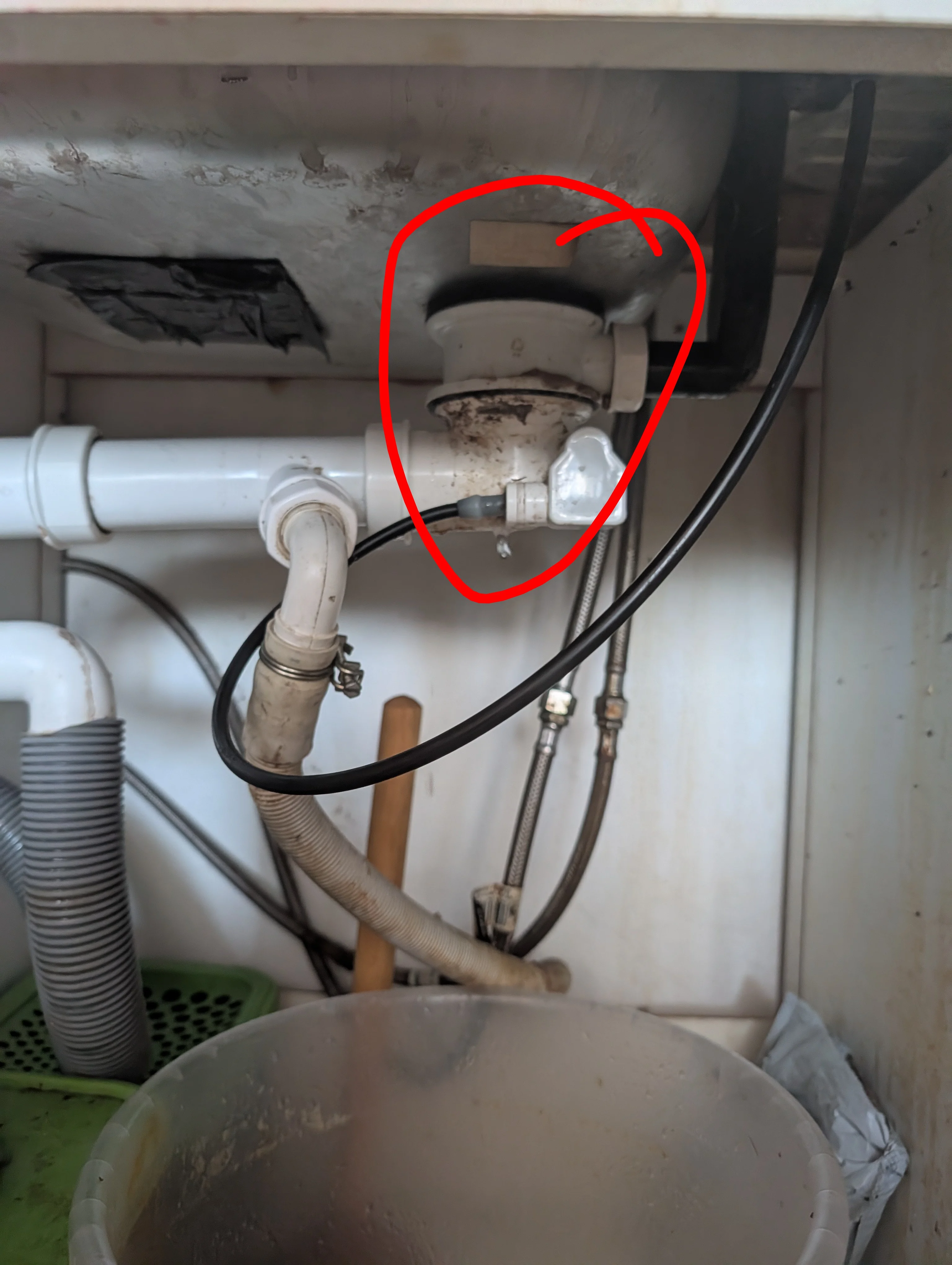
The image shows a leaky sink P trap. A drop of water is visible at the bottom of the P trap, indicating a leak. The P trap is corroded and dirty, which may be causing the leak.
Key Takeaways
Identify the source of the leak
Clean or replace the P trap
Check for corrosion and damage
Tighten loose connections
Consider replacing the P trap if necessary
The Hidden Dangers of a Leaky Sink P Trap
A leaky sink P trap can cause significant water damage and lead to costly repairs if left unchecked. The P trap is a critical component of your sink's plumbing system, and a leak can be a sign of a more significant issue. In this article, we will explore the common causes of a leaky sink P trap and provide a step-by-step guide on how to fix it.
The Professional Reality
The image shows a corroded and dirty P trap with a visible leak. The P trap is located under the sink and is responsible for trapping water to prevent sewer gases from entering the home. A leak in the P trap can be caused by corrosion, loose connections, or damage.
Implementation Guide
To fix a leaky sink P trap, follow these steps:
1. Turn off the water supply to the sink.
2. Inspect the P trap for corrosion and damage.
3. Clean or replace the P trap if necessary.
4. Tighten loose connections.
The key to a successful repair is to identify the source of the leak.Learn more about P trap installation and repair
The Practitioner’s Reality Check
The Counter-Intuitive Insight: Many homeowners assume that a leaky sink P trap is a simple fix, but it can be a sign of a more significant issue.
The Common Trap: Homeowners often overlook the importance of regular maintenance, leading to costly repairs down the line.
Frequently Asked Questions
What causes a leaky sink P trap?
A leaky sink P trap can be caused by corrosion, loose connections, or damage.
How do I fix a leaky sink P trap?
To fix a leaky sink P trap, turn off the water supply, inspect the P trap, clean or replace it if necessary, and tighten loose connections.
Can I replace the P trap myself?
Yes, replacing a P trap is a relatively simple process, but it requires some plumbing knowledge and experience.
How often should I inspect my P trap?
It is recommended to inspect your P trap every 6-12 months to prevent leaks and water damage.
What are the consequences of a leaky sink P trap?
A leaky sink P trap can cause water damage, mold growth, and attract pests.
Can a leaky sink P trap be a sign of a more significant issue?
Yes, a leaky sink P trap can be a sign of a more significant issue, such as corrosion or damage to the plumbing system.