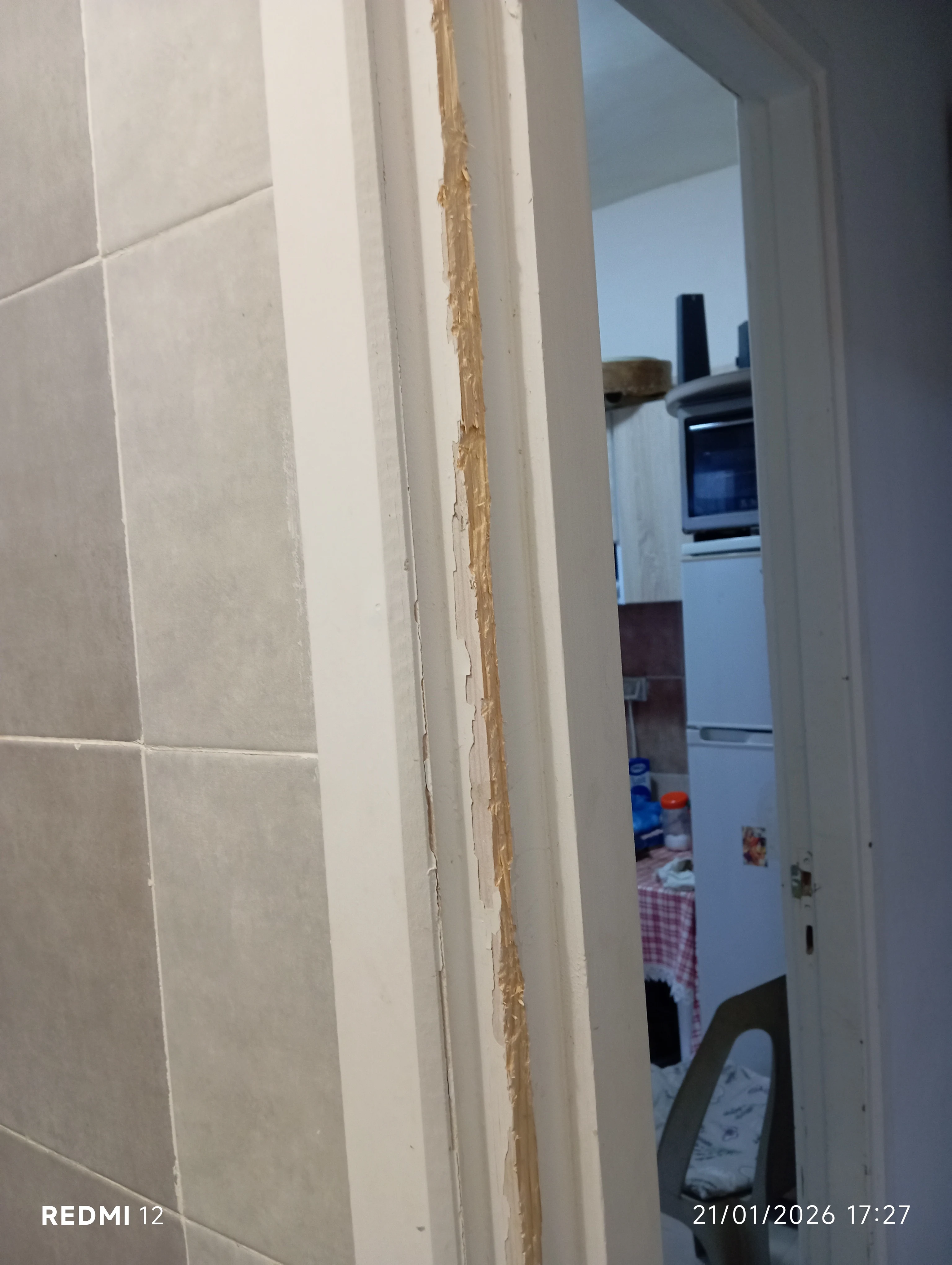
Damaged Door Frame Repair
To repair a damaged door frame: assess the damage type (cracks, chips, or rot), remove loose paint and debris, apply wood filler or epoxy to cracks using a putty knife, let dry completely (usually 2-4 hours), sand smooth with 120-220 grit sandpaper, prime the repaired area, then paint to match. For rotted sections, cut out damaged wood with a chisel, fit and secure replacement wood blocks with wood glue and screws, then sand, prime, and paint. Small chips need only wood filler; extensive rot requires section replacement.
Understanding Door Frame Damage
Common Types of Door Frame Damage
The image clearly shows a door frame with chipped paint and exposed wood, likely caused by moisture or physical impact. The damaged area appears to be along the threshold, which is a common spot for water seepage. The surrounding tile work seems intact, but the damage to the door frame is noticeable. Paint chips and surface damage: Minor cosmetic issues where paint has flaked off but underlying wood remains solid. Usually caused by impact, scraping, or age. Cracks and splits: Fissures in the wood running vertically along the jamb or horizontally near hinges. These can be superficial surface cracks or deep structural splits. Wood rot: Soft, spongy, or crumbling wood caused by prolonged moisture exposure. Rot weakens structural integrity and spreads if untreated. Appears dark and discolored or light and powdery depending on rot type. Impact damage: Dents, gouges, or splintered wood from doors slamming, furniture impacts, or forced entry attempts. Moisture damage: Swelling, warping, or decay from water exposure. Common near thresholds, exterior doors, and areas with poor drainage.Assessing Damage Severity
The screwdriver test for rot: Gently probe suspected rot areas with a screwdriver or awl. If the tool sinks in easily more than ⅛ inch, rot has compromised the wood's integrity and requires more than cosmetic repair. Surface vs. structural: Surface damage affects only paint and the outer wood layer. Structural damage penetrates deep into the frame, affecting its strength and ability to support the door. Repair vs. replace decision: * Repair: Damage limited to one area, wood is mostly solid, frame is structurally sound * Replace: Extensive rot throughout frame, multiple areas severely damaged, frame no longer securely holds doorPrimary Causes of Door Frame Damage
Understanding causes helps prevent repeat problems: Moisture exposure: Water from rain, leaks, poor drainage, or high humidity causes 80% of door frame problems. Exterior doors near grade without proper flashing are especially vulnerable. Physical impact: Doors slamming repeatedly, furniture moving, or forced entry attempts create cracks, dents, and splintered wood. Age and weathering: UV exposure, temperature fluctuations, and normal wear gradually break down paint and wood, creating entry points for moisture. Poor installation or maintenance: Inadequate sealing, missing caulk, or infrequent repainting allows water infiltration and accelerates deterioration.How to Repair Door Frame Damage
Method 1: Repairing Chips and Surface Damage (Quick Fix)
For paint chips and minor surface issues where wood remains solid. What you'll need: * Wood filler (Elmer's or DAP for small repairs) * Putty knife (2-3 inch flexible) * Sandpaper (120 and 220 grit) * Primer * Paint matching your door frame * Clean cloths Step-by-step process: 1. Clean the damaged area: Remove loose paint chips, dirt, and debris using a stiff brush or cloth. Wipe with a damp cloth and let dry completely. 2. Prepare the surface: Lightly sand around the damaged area with 120-grit sandpaper to create texture for better adhesion. Wipe away sanding dust. 3. Apply wood filler: Using a putty knife, press wood filler into chips and cracks. Overfill slightly—filler shrinks as it dries. Smooth the surface by drawing the putty knife across in one motion. 4. Let dry completely: Follow manufacturer's drying time (usually 2-4 hours). Don't rush this step. 5. Sand smooth: Once fully dry, sand the filled area with 120-grit, then 220-grit sandpaper until flush with surrounding wood. Wipe away all dust. 6. Prime: Apply primer to the repaired area. Primer seals the filler and ensures paint adhesion and color match. 7. Paint: Apply 2 coats of paint matching your door frame, letting each coat dry completely. Expected time: 30 minutes active work + drying time Cost: $10-15 for materialsMethod 2: Repairing Cracks and Splits
For cracks that haven't separated completely. Process: 1. Clean and assess: Clean the crack thoroughly. Determine if it's superficial or structural. 2. Apply wood glue: For cracks that can be pressed together, work wood glue deep into the crack using a thin applicator or syringe. 3. Clamp and secure: Press crack closed and clamp if possible. For cracks in door frames that can't be clamped, use finishing nails to hold pieces together while glue dries. 4. Remove excess glue: Wipe away squeezed-out glue immediately with a damp cloth. 5. Let cure: Allow 24 hours for complete curing. 6. Fill and finish: If gaps remain after gluing, fill with wood filler, then sand, prime, and paint. Pro tip: For structural cracks, reinforce with wood screws driven at angles through the crack after gluing.Method 3: Repairing Rotted Sections (Advanced Repair)
For wood rot or severe deterioration requiring section replacement. What you'll need: * Chisel (¾ inch or 1 inch) * Hammer * Replacement wood (matching dimension of original) * Wood saw * Wood glue and/or polyurethane glue * Screws (2-3 inches) * Drill with bits * Two-part epoxy or polyester wood filler * Sandpaper * Primer and paint Step-by-step process: 1. Remove all rotted wood: Using a sharp chisel and hammer, carefully remove all soft, damaged wood. Cut until you reach solid, healthy wood. Square up the recess for easier fitting. Critical: Remove ALL rotted wood. Even small amounts left behind will continue spreading rot into your repair. 2. Measure and cut replacement wood: Measure the cleaned-out area and cut a piece of wood (typically 2×1 softwood or matching hardwood) to fit tightly. The replacement should be slightly longer than the damaged area for maximum strength. 3. Apply adhesive: Apply wood glue or polyurethane glue (PU glue sets in about an hour) to all surfaces of the replacement block and the recess. 4. Install replacement wood: Hammer or press the replacement wood firmly into place. It should fit snugly. 5. Secure with screws: Drill pilot holes and drive 2-3 screws through the replacement wood into solid frame material to reinforce the bond. 6. Let cure: Allow glue to cure fully (24 hours for wood glue, 1 hour for PU glue before continuing work). 7. Plane and sand flush: Once cured, plane off any high spots and sand the repair flush with the surrounding frame. 8. Fill gaps and imperfections: Apply wood filler to any small gaps between the replacement wood and original frame. Let dry and sand smooth. 9. Prime and paint: Prime the entire repaired section, then apply 2-3 coats of paint. Expected time: 2-3 hours active work + curing time Cost: $15-25 for materials The key to a successful repair is addressing the damage promptly and ensuring a smooth finish that blends seamlessly with the original frame.Method 4: Two-Part Epoxy for Structural Repairs
For situations where removing and replacing wood is impractical. When to use: Repairs where access is limited, damage is in hard-to-replace areas, or you need maximum strength without removing material. Process: 1. Remove loose rot: Scrape out all soft, rotted wood but don't worry about creating perfect squared recesses. 2. Apply wood hardener: Products like Minwax Wood Hardener soak into remaining soft wood and solidify it. Apply liberally and let dry (usually 2-6 hours). 3. Mix two-part filler: Mix equal parts epoxy filler (or polyester filler like Bondo) according to manufacturer instructions. You have 10-15 minutes working time. 4. Apply filler: Press filler into the damaged area using a putty knife, building up layers if needed for deep voids. Overfill slightly. 5. Shape while soft: As filler begins hardening (reaches "soap" consistency), carve and shape it with putty knife or chisel to match the original profile. 6. Sand, prime, paint: Once fully hardened, sand smooth and finish as described above. Advantage: Creates repairs stronger than the original wood and doesn't require cutting perfect replacement pieces.Preventing Future Door Frame Damage
Moisture Control
Fix drainage issues: Ensure gutters and downspouts direct water away from door frames. Ground should slope away from doorways. Maintain caulk and sealant: Check caulk around door frames annually. Reapply where cracked or missing to prevent water infiltration. Improve ventilation: Reduce interior humidity that causes condensation on door frames, especially in bathrooms and kitchens. Install drip caps: Exterior doors benefit from drip caps (metal flashing) above the frame that directs water away.Regular Maintenance Schedule
Annual inspection: Check for paint chips, cracks, soft spots, or early signs of moisture damage every spring. Repaint every 3-5 years: Exterior door frames need repainting more frequently than interior frames. Quality exterior paint with primer provides critical moisture protection. Touch up chips immediately: Small paint chips repaired promptly prevent water from entering wood and causing rot. Tighten hardware: Loose hinges and strike plates stress frames and cause cracks. Tighten screws annually.Impact Protection
Install door stops: Prevent doors from slamming into frames and causing damage. Use protective bumpers: Self-adhesive bumpers on walls prevent door handles from impacting and damaging frames. Careful furniture moving: Protect frames when moving furniture through doorways. Consider temporary cardboard shields.The Practitioner's Reality Check
Frequently Asked Questions
What causes door frame damage?
Door frame damage primarily results from moisture exposure (rain, leaks, condensation), physical impact from doors slamming or furniture contact, age and UV weathering, and poor maintenance like infrequent painting or failed caulking. Exterior door frames near ground level without proper drainage are most vulnerable.
Can I repair a damaged door frame myself?
Yes, most door frame repairs are DIY-friendly with basic tools. Minor chips and surface cracks need only wood filler, sandpaper, and paint. Even moderate rot requiring section replacement can be handled by homeowners with basic carpentry skills. Extensive structural damage may require professional help.
How do I prevent door frame damage?
Prevent damage by: maintaining proper drainage away from doors, repainting every 3-5 years with quality exterior paint, checking and replacing deteriorated caulk annually, installing drip caps on exterior frames, using door stops to prevent slamming, and immediately touching up any paint chips.
When should I replace a door frame instead of repairing it?
Replace when: rot extends throughout the frame affecting multiple sections, structural integrity is severely compromised making the frame unstable, repeated repairs have failed, or repair costs approach replacement costs (usually around $200-400 for professional replacement versus $10-30 for typical repairs).
What materials do I need for door frame repair?
For basic repairs: wood filler, putty knife, sandpaper (120 and 220 grit), primer, and paint. For rot repairs, add: chisel, hammer, replacement wood pieces, wood glue, screws, and drill. For epoxy repairs: two-part wood filler and wood hardener.
How long does door frame repair take?
Minor chip repairs take 30 minutes active work plus 4-6 hours drying/painting time. Crack repairs take 1 hour plus 24-hour glue curing. Rot section replacement takes 2-3 hours plus 24 hours for glue curing. Most repairs can be completed in one weekend.
What's the best wood filler for door frames?
For minor cosmetic repairs, standard wood filler (DAP, Elmer's) works well. For structural repairs, use two-part epoxy filler (Minwax High Performance Wood Filler) or polyester filler (Bondo). Epoxy creates bonds stronger than the original wood and resists moisture better.
Can I use regular glue for wood door frame repairs?
Use wood glue (like Titebond) for cracks and splits in interior frames. For exterior frames or areas with moisture exposure, use polyurethane glue (like Gorilla Glue) which is waterproof and expands to fill gaps. Never use regular white glue—it's not waterproof or strong enough.
How do I match paint color on an old door frame?
Take a paint chip from an inconspicuous area to a paint store for computer color matching. Alternatively, bring a photo in good lighting. If exact matching is impossible, consider repainting the entire door frame for uniform appearance.
Is door frame repair worth it or should I just replace?
Repair is usually worth it for damage limited to small areas or single sections, when blades remain solid and functional, or for frames with good overall condition. Replacement makes sense only for extensive rot, multiple damaged areas, or when structural integrity is severely compromised.


